
A small garden does not have to feel restrictive. With thoughtful planning, even a compact patio can become an attractive outdoor space for relaxing, dining and entertaining. The secret lies in making practical design choices that balance comfort, appearance and available space without overcrowding the area.
Creating a luxurious atmosphere involves more than choosing expensive furniture. Carefully positioned lighting, coordinated materials, comfortable seating and patio awnings can make a modest outdoor area feel more welcoming and sophisticated. By focusing on proportion, functionality and visual harmony, homeowners can create a stylish patio that feels like a natural extension of their home.
Start With a Clear and Practical Layout
Good patio design begins with understanding how the available space will be used. Before purchasing furniture or decorative accessories, consider whether the priority is outdoor dining, quiet relaxation or occasional entertaining.
Measure the patio carefully and identify permanent features, including doors, steps, drainage points and surrounding walls. These details influence furniture placement and help prevent awkward layouts.
Avoid filling every corner with furniture. Leaving sufficient room for movement makes the patio feel more spacious and comfortable. A simple arrangement with one clearly defined seating area often works better than several competing features.
The position of the patio also matters. Areas receiving strong afternoon sunlight may need additional shade, while darker spaces benefit from lighter finishes and carefully positioned lighting.
Choose Furniture That Makes the Space Feel Larger
Furniture plays a significant role in how spacious and luxurious a patio appears. Oversized seating can make compact areas feel cramped, while appropriately proportioned pieces create a more balanced appearance.
Slimline chairs, compact benches and small outdoor sofas are useful choices. Furniture with raised legs can also create a lighter visual effect because more of the flooring remains visible.
Multifunctional furniture offers additional benefits. Storage benches provide seating while keeping cushions and smaller accessories organised. Folding tables and stackable chairs are practical when the patio must accommodate different activities.
Material selection deserves attention. Powder-coated aluminium, suitable treated timber and weather-resistant synthetic materials can provide attractive finishes, although their maintenance requirements vary.
Create Comfortable Shade Without Overcrowding
Shade is an important consideration when designing an inviting outdoor seating area. Direct sunlight can make a patio uncomfortable during warmer weather, especially where surrounding walls retain heat.
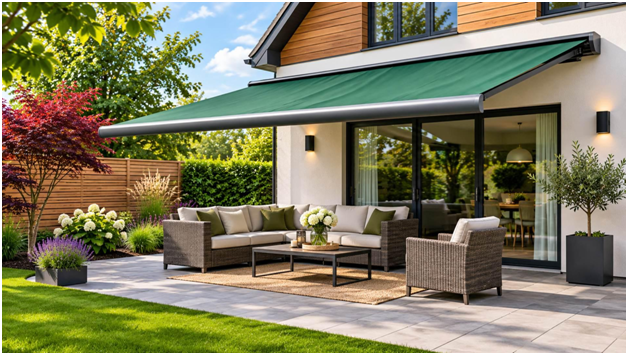
Retractable patio awnings offer a practical way to manage sunlight without permanently covering the entire outdoor space. They can be extended when shade is needed and retracted when homeowners prefer an open view of the sky.
Different designs offer manual or motorised operation, with selected systems providing additional features such as lighting or weather sensors. The right option depends on patio dimensions, available fixing surfaces and individual preferences.
Before installation, check the projection, mounting height and structural suitability of the wall. Wind exposure, drainage and manufacturer operating guidance should also influence the decision. Professional assessment is advisable when fixing requirements are uncertain.
Use Flooring to Create a Refined Appearance
Patio flooring provides the foundation for the entire design. A consistent surface can make a small outdoor area appear more organised and visually connected.
Porcelain paving, natural stone and suitable outdoor tiles offer different textures and finishes. Large-format paving with restrained joint patterns may create a cleaner appearance, although the dimensions should suit the patio.
Choose colours that complement the property’s exterior. Soft grey, warm beige and natural stone tones provide a neutral background for furniture and planting.
Safety and maintenance are equally important. Outdoor paving should have appropriate slip resistance, effective drainage and suitable installation foundations. Avoid choosing materials based solely on appearance.
Add Greenery Without Sacrificing Floor Space
Plants bring colour, texture and natural character to a compact patio. However, too many large containers can restrict movement and make the space look crowded.
Vertical planting offers an effective alternative. Wall-mounted planters, climbing plants and narrow raised beds introduce greenery while preserving valuable floor space.
Choose plants according to sunlight, wind exposure and watering requirements. Evergreen varieties provide year-round structure, while seasonal flowers can introduce changing colour.
Using containers in coordinating colours creates a more consistent appearance. A limited planting palette with varied heights and leaf textures generally looks more considered than numerous unrelated varieties.
Introduce Lighting for Evening Comfort
Thoughtful lighting helps a patio remain attractive and usable after sunset. Rather than relying on one powerful light source, combine softer lighting at different heights.
Wall-mounted fixtures, discreet outdoor LED strips and low-level garden lights can highlight architectural details without overwhelming the space.
Warm-toned lighting often creates a relaxed atmosphere, while adjustable fittings provide flexibility for dining and quieter evenings.
Always select lighting suitable for outdoor conditions. Electrical installations should meet relevant safety requirements, with professional assistance for permanent wiring.
Use Simple Design Details for a Luxurious Finish
Small decorative decisions can have a noticeable effect on the overall appearance of a patio. The aim is to introduce comfort and personality without creating unnecessary clutter.
Consider these practical finishing touches:
- Outdoor cushions: Choose weather-resistant fabrics in coordinating colours.
- Compact rugs: Select outdoor-rated materials that suit the furniture arrangement.
- Decorative planters: Use consistent finishes to create visual balance.
- Privacy screening: Introduce suitable screens or planting where neighbouring views affect comfort.
- Coordinated accessories: Keep lanterns, cushions and smaller decorative pieces within a restrained colour palette.
Select accessories that can be cleaned, stored or replaced easily. Keeping decoration simple allows the strongest design features to stand out.
Maintain a Consistent Connection With Your Home
A luxurious patio should feel connected to the property rather than appearing as a separate, unrelated space.
Repeating colours, textures or materials from the adjoining interior creates visual continuity. Similar flooring tones, coordinated furniture finishes and complementary lighting can establish a unified appearance.
Consider the view through doors and windows. Keeping the main sightline uncluttered helps the garden appear more spacious from inside.
Practical details also contribute to the finished result. Concealed storage, clean paving and well-maintained plants create an orderly appearance without requiring expensive additions.
Final Thoughts
A compact patio can feel luxurious through careful planning, proportionate furniture, attractive flooring and thoughtful lighting. Vertical planting, coordinated accessories and practical shade solutions help create a comfortable outdoor space without sacrificing valuable room.
When considering improvements such as patio awnings, prioritise suitable dimensions, structural requirements and everyday usability. Begin with the layout, invest in durable materials and introduce decorative details gradually to create a patio that remains attractive and practical throughout the seasons.