
Outdoor events offer businesses valuable opportunities to connect with customers, increase brand visibility and create memorable experiences. However, attracting attention at crowded festivals, exhibitions and promotional gatherings can be challenging. Traditional banners and advertising boards often compete with numerous other displays, making it difficult for individual brands to stand out.
To address this challenge, businesses are increasingly exploring large-scale promotional structures that combine creativity with practical branding. Custom inflatables provide a flexible way to display oversized product shapes, branded characters and distinctive structures that attract attention from different viewing distances.
Why Giant Bespoke Displays Are Gaining Attention
Large promotional displays work because their size, shape and positioning make them visually different from conventional advertising materials. At busy outdoor venues, visitors encounter numerous signs, stalls and competing messages. A distinctive three-dimensional structure can provide a recognisable landmark.
Bespoke designs also allow businesses to communicate their identity through familiar colours, shapes and visual elements. Rather than relying entirely on written messages, brands can create displays that communicate an idea before visitors approach the promotional area.
However, size alone does not guarantee effective advertising. The design must remain relevant to the brand, suitable for the venue and understandable to the intended audience.
How Brands Use Giant Displays at Outdoor Events
Businesses use oversized promotional structures in several ways, depending on their marketing objectives and the available event space.
Creating Recognisable Brand Landmarks
A large branded structure can help visitors identify a company’s location within a crowded event. This is useful when promotional stands are positioned among numerous exhibitors or spread across extensive outdoor grounds.
Clear branding, recognisable colours and uncomplicated designs make displays easier to identify. Positioning also matters because nearby buildings, temporary structures and pedestrian routes can affect visibility.
Reproducing Products on a Larger Scale
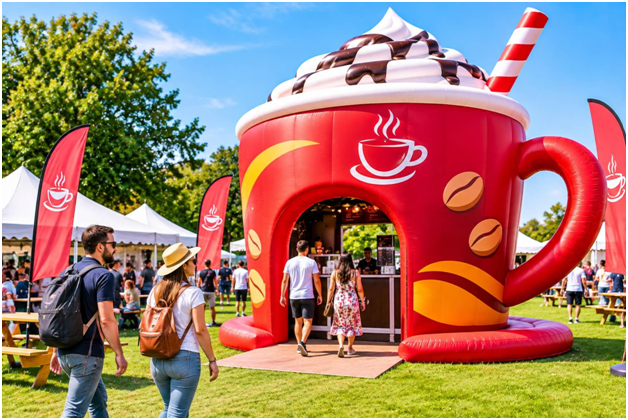
Oversized product-shaped displays allow businesses to highlight recognisable packaging, distinctive shapes or other visual characteristics.
These structures can communicate product identity without requiring lengthy explanations. However, complicated designs may become difficult to recognise from a distance, making accurate proportions and simplified details important considerations.
Creating Branded Entrances and Activity Areas
Large arches, inflatable structures and decorative installations can help define entrances, promotional zones and event spaces.
When positioned appropriately, these displays can support visitor movement while reinforcing brand identity. Organisers should ensure that installations do not obstruct accessibility routes, emergency access or important event signage.
The Role of Bespoke Design in Brand Recognition
Effective outdoor advertising requires more than placing a company logo on a large surface. The structure should reflect the organisation’s visual identity and communicate a clear message.
Colours, proportions, printed graphics and overall shape must work together. Designers should consider how the display appears from multiple directions, including areas where visitors may only see part of the structure.
Businesses exploring custom inflatables should establish their primary advertising objective before commissioning a design. A structure intended to attract distant attention may require a different approach from one intended to encourage closer interaction.
Professional design input can help assess whether the proposed shape, materials and dimensions are practical for the intended location.
Choosing the Right Display for an Outdoor Campaign
Selecting an appropriate promotional structure involves balancing visual impact with operational requirements. A display that looks impressive in a design preview may not suit every outdoor environment.
Before making a decision, businesses should consider:
- Event location: Assess the available ground space, nearby obstacles and visitor movement.
- Display dimensions: Choose proportions that suit the venue without overwhelming neighbouring installations.
- Brand visibility: Ensure colours, graphics and important messages remain recognisable from suitable distances.
- Weather exposure: Consider expected wind, rain and other conditions that may affect installation and operation.
- Power requirements: Confirm whether the chosen design requires continuous electrical power or another inflation method.
- Installation arrangements: Establish responsibility for transport, setup, supervision and removal.
- Budget and reuse: Consider manufacturing, storage, maintenance and potential use at future events.
Reviewing these factors early can prevent unsuitable design decisions and unexpected logistical difficulties.
Understanding Installation and Outdoor Safety
Outdoor conditions introduce practical challenges that must be considered during planning. Wind exposure, ground stability and the surrounding environment can influence whether an inflatable installation is suitable.
Some inflatable structures require continuous airflow from an electric fan, while sealed or gas-filled designs operate differently. Each type has specific installation, supervision and maintenance requirements.
Anchoring arrangements must be appropriate for the structure and location. Event organisers should also confirm the venue’s rules, obtain necessary permissions and follow the manufacturer’s operating instructions.
For substantial installations, professional assessment is advisable. Qualified suppliers can explain appropriate anchoring methods, operating limitations and procedures for responding to changing weather conditions.
Making Large Displays Part of a Wider Marketing Strategy
Giant promotional installations are most useful when they support a clearly defined campaign rather than functioning as isolated decorations.
Their design should complement other event materials, including staff clothing, printed signage and promotional messaging. Consistent branding helps visitors connect the physical display with the organisation.
Positioning should also support the intended visitor experience. A structure that attracts attention but directs people towards an inaccessible or congested area may reduce its practical value.
Businesses can assess effectiveness through relevant measures, including visitor enquiries, conversations at promotional stands and campaign engagement. These provide more useful feedback than visual appearance alone.
Planning for Reuse, Storage and Maintenance
Businesses attending multiple events should consider the long-term requirements of their promotional displays.
Reusable custom inflatables may offer practical advantages when their dimensions, design and installation requirements suit different venues. However, repeated use depends on appropriate handling, storage and maintenance.
Materials should be inspected for wear, damage and cleanliness between events. Electrical components, inflation equipment and attachment points may also require checks according to the manufacturer’s guidance.
Choosing adaptable branding and manageable dimensions during the design stage can make future use more practical without compromising the original campaign objectives.
Conclusion
Giant bespoke displays offer brands a distinctive way to improve visibility, reinforce identity and organise promotional spaces at outdoor events. Their effectiveness depends on thoughtful design, suitable positioning and clear communication rather than size alone.
When considering custom inflatables, businesses should assess venue restrictions, weather exposure, installation requirements and long-term use. Careful planning and professional advice can help create a display that is visually effective, practical and appropriate for the event.