
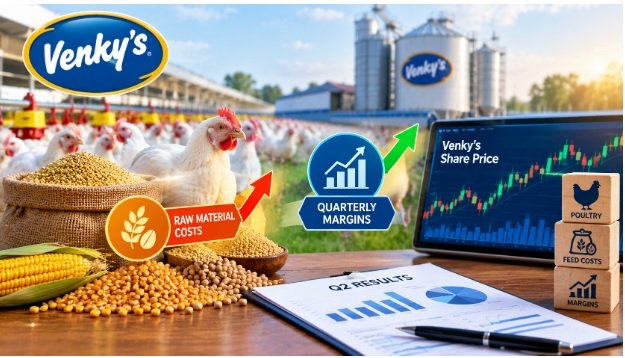
The Venky share price can be influenced by several factors, including poultry demand, product realisations, feed costs, and quarterly profitability. For a poultry-focused company, raw material expenses are particularly important because feed ingredients form a significant part of the overall cost structure. Changes in the prices of maize, soybean meal and other feed components can therefore affect operating margins and, in turn, investor sentiment around the stock.
Why Raw Material Costs Matter for Venky
Venky’s operates across poultry-related businesses, including poultry breeding, processing and animal feed. Among these activities, feed costs can have a major influence on profitability because poultry producers require consistent supplies of nutritional inputs. When the prices of key raw materials rise sharply, production expenses can increase faster than selling prices. This can put pressure on quarterly margins even when demand remains healthy.
For investors tracking the Venky share price, it is therefore useful to look beyond revenue growth and examine the company’s cost structure. A quarter with strong sales may not necessarily result in higher profits if input inflation significantly increases operating expenses.
Impact of Maize and Soybean Prices
Maize and soybean-based products are important components of poultry feed. Their prices can fluctuate because of crop production, weather conditions, government policies, inventory levels, and demand from other industries. A rise in these commodity prices can increase the cost of producing poultry feed and potentially reduce margins if the company cannot immediately pass higher costs to customers.
Conversely, falling raw material prices can provide margin support. If selling prices remain stable while feed costs decline, the company may experience an improvement in operating profitability. This relationship is important when analysing quarterly financial performance and understanding movements in the Venky share price.
How Cost Changes Reach Quarterly Results
The impact of raw material inflation does not always appear immediately or in the same proportion. Companies may hold inventory purchased at earlier prices, use existing contracts or adjust selling prices depending on market conditions. As a result, a change in commodity prices during one month may influence margins gradually over subsequent quarters.
Investors should compare raw material expenses with revenue across multiple quarters rather than relying on one isolated result. Looking at EBITDA margins, operating profit and profit after tax can provide a clearer picture of whether cost pressures are temporary or becoming a longer-term challenge.
What Investors Should Watch in Quarterly Results
When evaluating Venky’s quarterly performance, investors can monitor revenue growth, EBITDA margins, feed and raw material expenses, poultry realisations, operating profit and net profit. Management commentary can also provide useful indications about commodity-cost trends and demand conditions.
A sustained decline in input costs combined with stable product prices could support margin recovery. On the other hand, rising maize and soybean prices, weak poultry realisations and higher operating expenses could create pressure on profitability.
Conclusion
The Venky share price can respond to changes in expectations about the company’s future earnings, making raw material costs an important factor for investors to monitor. Since feed-related inputs can have a meaningful impact on poultry economics, changes in maize, soybean and other commodity prices can influence quarterly margins. Investors should therefore assess input costs alongside sales growth, product prices, operating margins and management commentary rather than viewing the share price in isolation. Quarterly trends across several reporting periods can provide a more useful picture of the company’s underlying profitability and potential earnings direction.